24 Sept 2026
Breast Reduction Cost, Risks & Insurance in Hyderabad
Safety Questions 1. What Are the Risks and Complications of Breast Reduction Surgery? Breast reduction is a commonly performed procedure, but like any surgery, it carries potential...
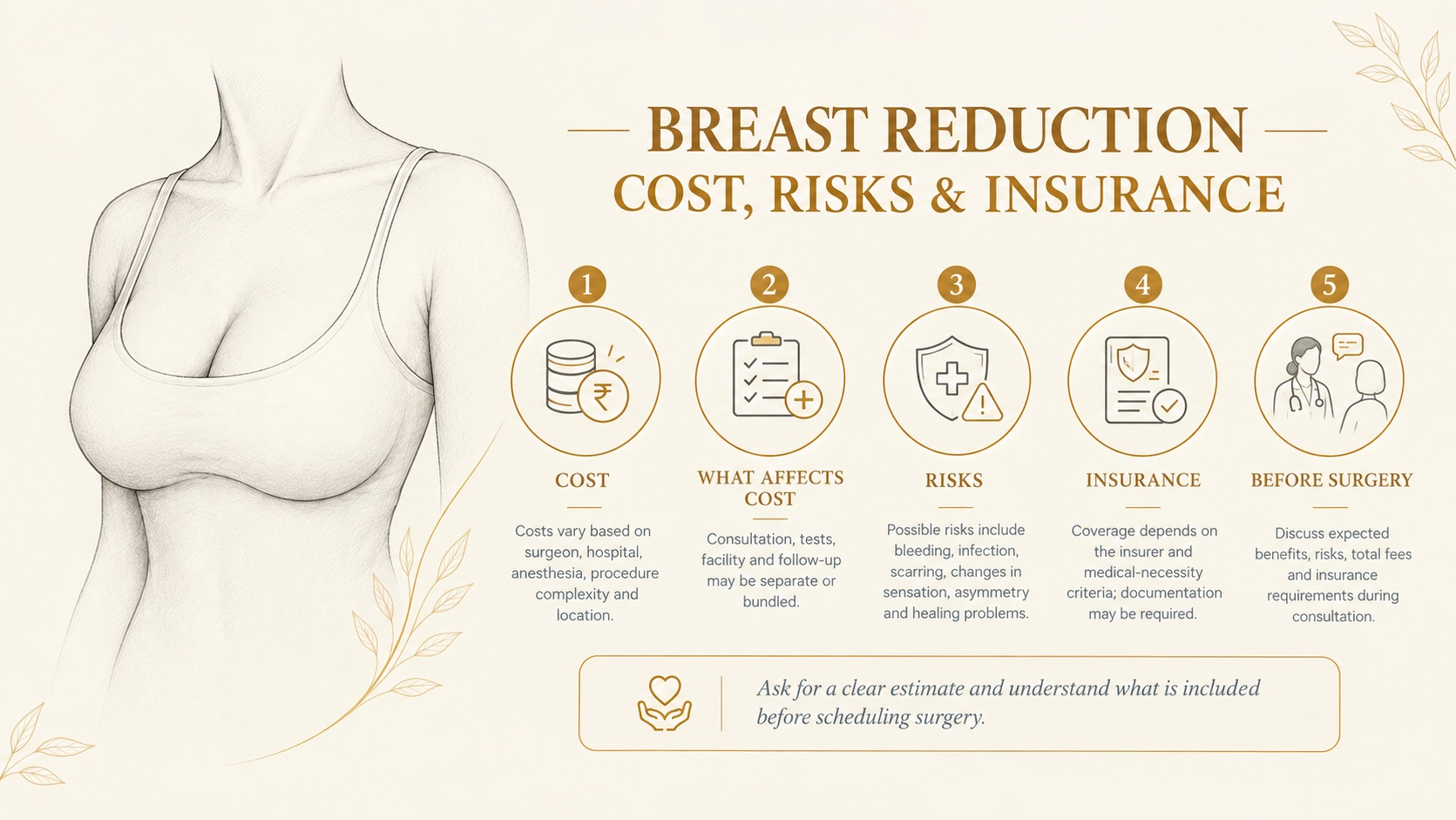
Safety Questions
1. What Are the Risks and Complications of Breast Reduction Surgery?
Breast reduction is a commonly performed procedure, but like any surgery, it carries potential risks and complications. During your consultation, I discuss these risks with you in detail and explain the steps taken to reduce them.
Possible complications include:
• Bleeding or collection of blood (haematoma)
• Infection
• Swelling and bruising
• Delayed wound healing
• Scarring, including thick or prominent scars
• Changes in breast or nipple sensation
• Breast asymmetry
• Changes in breast shape or contour
• Fat necrosis or loss of fatty tissue
• Problems with the nipple or areola blood supply
• Difficulty breastfeeding
• Need for revision surgery
The risk of complications varies depending on factors such as your general health, breast size, smoking status, weight, medical conditions, medications, and surgical technique.
I carefully assess these factors before surgery and provide detailed postoperative instructions to support safe healing.
2. Can Nipple Loss Occur After Breast Reduction?
A significant loss of the nipple or areola is uncommon, but it is a recognized potential complication of breast reduction surgery.
The nipple and areola receive their blood supply through the surrounding breast tissue. In some patients, particularly those requiring a very large reduction or with significant breast drooping, maintaining adequate blood supply can be more challenging.
Reduced blood flow can potentially result in:
• Delayed healing
• Partial tissue loss
• Rarely, complete loss of the nipple and areola
I carefully select the surgical technique based on your breast anatomy and the amount of reduction required, with the aim of preserving the blood supply to the nipple and surrounding tissues.
Certain factors, including smoking, diabetes, vascular problems, and other medical conditions, may increase the risk of healing or blood-supply complications.
These risks are discussed individually during your consultation so that you can make an informed decision about surgery.
3. What Are the Chances of Wound Healing Problems?
Most patients heal without major wound complications, but delayed healing can occur after breast reduction, particularly at areas where several incision lines meet.
Healing problems may include:
• Small areas of wound separation
• Delayed closure of an incision
• Infection
• Fluid or blood collection
• Skin or tissue breakdown
The risk can be influenced by factors such as smoking, diabetes, obesity, nutritional status, certain medications, and the extent of surgery.
I assess your health and individual risk factors before surgery and provide instructions regarding wound care, activity, nutrition, and other aspects of recovery.
If a small area heals slowly, it can often be managed with appropriate wound care and followup. However, more significant wound problems may occasionally require additional treatment.
4. Is Breast Reduction a Safe Procedure?
Breast reduction is a well-established surgical procedure, but no operation is completely without risk.
For an appropriately selected patient, surgery can be performed safely when it is carried out by a qualified plastic surgeon in a properly equipped surgical facility, with appropriate anesthesia and postoperative monitoring.
Before recommending surgery, I review your:
• Medical history
• Current medications
• General health
• Weight and nutritional status
• Smoking and lifestyle factors
• Breast anatomy
• Surgical goals and expectations
I also discuss the potential benefits, limitations, risks, scars, recovery, and possible complications so you can make an informed decision.
Your safety is the primary consideration throughout the consultation, surgery, and recovery process.
5. Does Smoking Increase Complications After Breast Reduction?
Yes. Smoking can significantly increase the risk of complications after breast reduction surgery.
Nicotine and other chemicals in tobacco products can reduce blood flow to healing tissues and may interfere with wound healing. This can increase the risk of:
• Delayed wound healing
• Wound separation
• Infection
• Skin or tissue loss
• Problems with nipple and areola blood supply
• More noticeable or prolonged scarring
This concern can also apply to other sources of nicotine, including vaping and certain nicotine-containing products.
I strongly recommend discussing your smoking or nicotine use openly with your surgical team before the procedure. Depending on your individual circumstances, you may be advised to stop smoking and nicotine use before and after surgery for a specified period.
The exact timeframe should be determined by your surgeon based on your health and surgical plan. Avoiding smoking and nicotine around the time of surgery can help reduce complications and support better healing.
Financial Questions
6. How Much Does Breast Reduction Surgery Cost?
The cost of breast reduction surgery varies from patient to patient. There is no single fixed price, as the total cost depends on several factors, including the extent of reduction, surgical technique, hospital or surgical facility, anesthesia, surgeon's fees, medications, investigations, and postoperative care.
During your consultation, I assess your breast size, anatomy, medical needs, and desired outcome before providing a personalized treatment plan and discussing the expected costs.
If you are considering breast reduction, it is important to look at the complete treatment cost, rather than comparing surgical fees alone. Your treatment estimate should clarify what is included, such as the surgeon's fee, anesthesia, hospital or facility charges, investigations, and follow-up care.
7. Will Insurance Cover My Breast Reduction Surgery?
Insurance coverage for breast reduction depends on your insurance policy, medical necessity criteria, and the terms set by your insurer.
Some insurance policies may provide coverage when breast reduction is considered medically necessary—for example, when significantly enlarged breasts are associated with persistent symptoms such as neck, shoulder, or back discomfort, skin problems, or functional limitations.
However, cosmetic or elective breast reduction may not be covered under some policies.
Insurance companies may have specific requirements regarding symptoms, previous conservative treatments, medical documentation, and the amount of tissue expected to be removed. Having symptoms does not automatically guarantee insurance approval.
I can provide appropriate medical documentation when clinically indicated, but the final decision regarding coverage and reimbursement is made by your insurance provider.
I recommend contacting your insurance company before scheduling surgery to understand your specific policy requirements.
8. What Documentation Is Needed for Insurance Approval?
The documentation required for insurance approval varies between insurance companies and individual policies. When breast reduction is being considered for medical reasons, insurers may request evidence showing that your symptoms are related to the size and weight of your breasts.
Depending on the insurer's requirements, documentation may include:
• A detailed medical history and examination
• Documentation of symptoms such as neck, shoulder, or back pain
• Records of skin irritation or recurrent rashes beneath the breasts
• Documentation of how symptoms affect daily activities or exercise
• Records of previous treatments or conservative measures, when required
• Photographs or clinical measurements, if requested
• The proposed surgical plan
• An estimate of the amount of breast tissue expected to be removed
• Relevant medical records from other healthcare providers
Some insurers may also require prior authorization before surgery.
I recommend checking directly with your insurance provider for its current criteria and required documents. My team can help provide the relevant clinical documentation required from our side when appropriate, but insurance approval is ultimately determined by your insurer.
Questions Patients Often Search but Hesitate to Ask
9. Will My Partner Notice a Difference After Breast Reduction?
Yes, your partner may notice a change in your breast size and shape after breast reduction. However, the extent of the visible change depends on how much tissue is removed, your original breast size and shape, and how your breasts heal.
Breast reduction is primarily performed to reduce breast size and weight while creating a balanced breast shape that suits your body proportions. The goal is not simply to make the breasts smaller, but to achieve a natural and proportionate appearance.
It is also important to remember that your decision to undergo breast reduction should be based on your comfort, health, and personal goals, rather than your partner's expectations.
During your consultation, I discuss the changes you can realistically expect and help you understand how the procedure may affect breast size, shape, scars, and nipple position.
10. Will I Look Less Feminine After Breast Reduction?
Breast reduction does not necessarily mean losing a feminine appearance. The procedure is designed to reduce excess breast volume while reshaping the remaining breast tissue to create a proportionate breast contour.
Many women choose breast reduction because they want their breasts to be more comfortable and better balanced with the rest of their body.
The final appearance depends on factors such as your:
• Original breast size and shape
• Body proportions
• Skin elasticity
• Amount of tissue removed
• Breast tissue composition
• Surgical technique
During surgery, I aim to create a breast shape that is proportionate, balanced, and appropriate for your individual anatomy.
Your personal goals are an important part of the consultation, and we discuss the size and shape you would like to achieve while keeping the result medically and anatomically realistic.
11. Can I Choose My Exact Cup Size After Breast Reduction?
You can discuss your desired breast size with your plastic surgeon, but an exact cup size cannot be guaranteed.
Bra cup sizes are not standardized and can vary between brands and manufacturers. In addition, your final breast size depends on your breast anatomy, the amount of tissue that can be safely removed, skin quality, and how your breasts heal.
Instead of focusing solely on a specific cup size, I recommend discussing:
• How much smaller you would like your breasts to be
• Your preferred breast proportions
• Your desired breast shape
• Your activity and lifestyle requirements
• Any physical symptoms you want to address
During your consultation, I assess what reduction is realistically achievable while maintaining a safe and proportionate breast shape.
12. Will I Regret Reducing My Breasts Too Much?
It is completely reasonable to have concerns about being too small after breast reduction. Because breast reduction permanently removes breast tissue, it is important to discuss your expectations carefully before surgery.
During the consultation, I ask about your preferred size, lifestyle, clothing preferences, physical symptoms, and aesthetic goals. We then discuss what degree of reduction is appropriate for your anatomy and what can be safely achieved.
I cannot guarantee an exact final cup size, and the breasts may initially appear smaller or different because of swelling and changes during healing.
Clear communication before surgery is important. If you are uncertain about how much reduction you want, we should discuss your concerns in detail before proceeding.
13. What If I Want a Smaller Size Than the Surgeon Recommends?
Your preferences are an important part of the decision-making process, and you should feel comfortable discussing your desired breast size openly during your consultation.
However, there are medical and anatomical limits to how much breast tissue can be safely removed. Removing an excessive amount of tissue may affect breast shape, skin coverage, nipple blood supply, sensation, and other aspects of the surgical outcome.
If your preferred size is smaller than what I believe is appropriate or safely achievable, I will explain the reasons and discuss the available options with you.
The final surgical plan should be based on a combination of your goals, your anatomy, and what can be safely achieved.
14. Can Breast Reduction Improve Confidence and Body Image?
Breast reduction may have a positive effect on self-confidence and body image for some women, particularly when breast size has caused physical discomfort, difficulty with clothing or exercise, or concerns about body proportions.
After surgery, some patients feel more comfortable participating in physical activities, wearing different styles of clothing, or carrying out everyday activities without the same concerns about breast size.
However, breast reduction is primarily a physical procedure, and the emotional benefits vary from person to person. Surgery cannot guarantee a particular change in confidence or body image.
During your consultation, I encourage you to discuss what you hope to achieve from surgery, both physically and emotionally. Having realistic expectations is an important part of making an informed decision about breast reduction.
Continue Reading: The Complete Breast Reduction Guide
• Part 1: Thinking About Breast Reduction? 8 Questions to Ask Before Surgery → /breast-reduction-candidate-hyderabad
• Part 2: How Is Breast Reduction Surgery Performed? 7 Questions About the Procedure → /breast-reduction-procedure-scars-hyderabad
• Part 3: Breast Reduction Recovery and Results: 13 Questions Answered by a Plastic Surgeon → /breast-reduction-recovery-results-hyderabad
• Part 4: Breast Reduction Risks, Cost and Insurance: 14 Honest Answers From a Plastic Surgeon (you are here)