27 Oct 2026
Day 1: Why Early Wound Treatment Matters: When Can Delays Complicate Reconstruction?
A wound may look small, but delaying treatment can sometimes make reconstruction more challenging. Why does timing matter? And when can a delay complicate treatment? Not every woun...
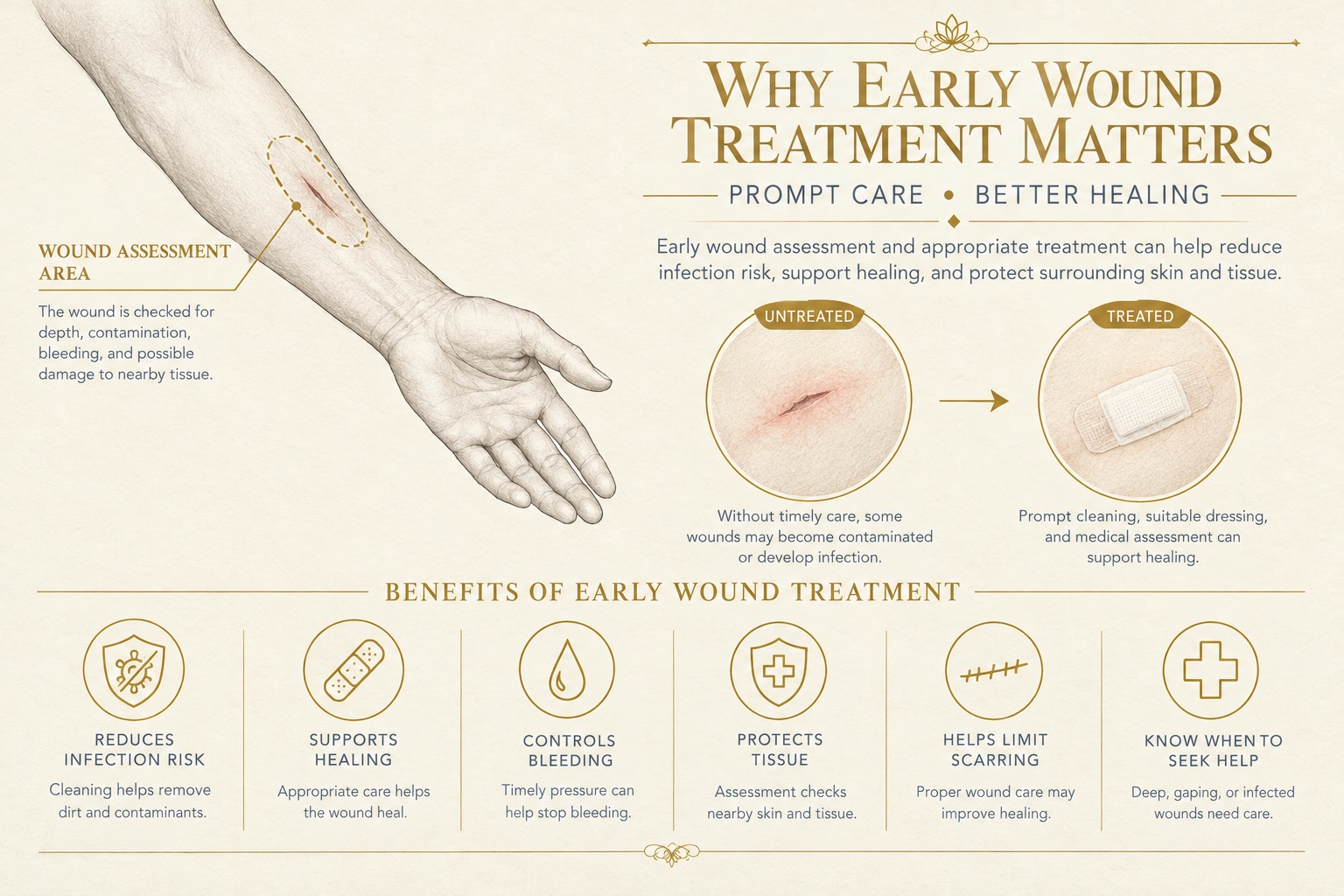
A wound may look small, but delaying treatment can sometimes make reconstruction more challenging.
Why does timing matter? And when can a delay complicate treatment?
Not every wound requires surgery, and many minor injuries heal with appropriate wound care. However, injuries involving deeper tissues, exposed structures, poor blood supply, or significant contamination may require prompt medical assessment.
When a wound is not evaluated or treated appropriately, complications can develop that affect healing, tissue health, and reconstructive options.
Understanding when to seek medical attention can help patients make informed decisions about wound care and recovery.
What Is Wound Reconstruction?
Wound reconstruction is a surgical approach used to repair wounds that cannot heal adequately with routine wound care or that require restoration of damaged skin and underlying tissues.
Depending on the injury, treatment may involve:
● Direct closure of the wound.
● Skin grafting to cover areas where skin has been lost.
● Tissue flaps to cover wounds using nearby healthy tissue.
● Microsurgical reconstruction for selected complex injuries and
Always needs removal of damaged tissues before definitive wound closure.
The appropriate treatment depends on the wound's depth, location, blood supply, contamination, surrounding tissue condition, and the patient's overall health.
Why Does Timing Matter in Wound Treatment?
1. Infection Can Complicate Healing
Open wounds can allow bacteria to enter damaged tissues. Deep, contaminated, or crush-related injuries may have a higher risk of infection.
If an infection develops, it can damage surrounding tissue, delay healing, and complicate reconstruction. In severe cases, infection may spread to deeper structures or the bloodstream.
Early medical assessment helps determine whether wound cleaning, removal of damaged tissue, antibiotics, or other treatment is necessary.
2. Deeper Tissue Damage May Go Unnoticed
An injury can affect more than the skin visible on the surface. Fat, muscles, tendons, nerves, blood vessels, and bones may also be damaged.
A wound that appears small may therefore require more detailed assessment, especially if it was caused by a sharp object, a crush injury, or significant trauma.
Prompt evaluation helps identify hidden damage and determine whether specialist treatment is needed.
3. Scarring Can Affect Movement and Function
Scar tissue is a natural part of wound healing. However, some wounds develop tight or restrictive scars that affect movement.
This can be particularly concerning around the hands, fingers, joints, and neck, where flexibility and movement are important.
Appropriate wound management and follow-up can help reduce certain complications and support functional recovery.
4. Reconstructive Treatment May Become More Complex
Some wounds can be closed directly, while others require skin grafts or tissue flaps.
If a wound develops infection, loses additional tissue, or experiences delayed healing, the surgeon may need to consider a different reconstructive approach.
When Can Delaying Wound Treatment Become a Concern?
Certain injuries deserve particular attention because delayed assessment may increase the risk of complications.
Deep Cuts and Open Injuries
Deep cuts can damage blood vessels, tendons, or nerves even when the skin opening appears relatively small.
Prompt assessment helps determine whether the wound needs closure, surgical repair, or additional treatment.
Crush Injuries
Crush injuries can damage tissues and impair blood circulation beyond the visible wound margins. The full extent of the damage may not be immediately apparent.
Timely assessment helps doctors evaluate tissue viability and plan appropriate treatment.
Wounds With Exposed Tendons or Bones
When an injury exposes tendons, bones, joints, or other deep structures, specialist evaluation is important.
Depending on the injury, treatment may involve wound preparation, protection of exposed structures, and appropriate soft-tissue coverage.
Wounds Showing Signs of Infection
Increasing redness, swelling, warmth, worsening pain, pus, or fever may indicate infection.
These symptoms should not be ignored. Prompt medical assessment is important because an untreated infection can damage tissue and complicate reconstruction.
Wounds That Are Not Healing
A wound that remains open, repeatedly breaks down, or heals more slowly than expected may need further evaluation.
Possible contributing factors include poor blood circulation, diabetes, infection, smoking, and other health conditions.
Identifying the underlying cause is an important part of selecting appropriate treatment.
Does Every Wound Need Immediate Reconstructive Surgery?
No. Not every wound needs surgery, and the timing of reconstruction varies according to the injury.
Some wounds heal with cleaning, dressings, and regular medical follow-up. Others require urgent intervention, while complex wounds may benefit from staged treatment.
A surgeon may first need to remove damaged tissue, control infection, assess blood flow, or prepare the wound before performing definitive reconstruction.
The goal is not simply to close the wound as quickly as possible. It is to achieve safe healing while preserving function and obtaining the best realistic outcome for the patient.
How Can a Plastic Surgeon Help With Complex Wounds?
Plastic and reconstructive surgeons assess wounds with consideration for both functional recovery and the appearance of the healed area.
Depending on the injury, treatment planning may include:
● Detailed wound assessment: Evaluating wound depth, tissue damage, blood supply, and possible involvement of deeper structures.
● Wound preparation: Cleaning the wound and removing non-viable tissue when clinically indicated.
● Reconstructive planning: Determining whether direct closure, a skin graft, or a tissue flap is appropriate.
● Functional preservation: Considering the impact of the injury on movement, sensation, and nearby structures.
● Follow-up and scar management: Monitoring recovery and addressing complications when necessary.
For complex injuries, treatment may also require coordination with other medical specialists.
When Should You Seek Medical Attention?
Seek urgent medical attention for a deep or gaping wound, uncontrolled bleeding, exposed bone or tendon, loss of sensation or movement, or a wound associated with a severe crush injury.
You should also seek prompt assessment if a wound develops increasing redness, swelling, warmth, worsening pain, pus, or fever.
Severe bleeding, rapidly spreading redness or swelling, or signs of serious illness require emergency evaluation.
Do not wait for a wound to become visibly worse if the injury appears significant.
Frequently Asked Questions
1. Can a small wound require reconstructive surgery?
Yes. The size of the skin opening does not always reflect the severity of an injury. A small wound can involve deeper structures, depending on its location and cause. Medical assessment helps determine the appropriate treatment.
2. What happens if wound treatment is delayed?
Depending on the injury, delayed assessment may allow infection, tissue damage, or other complications to develop. It may also postpone treatment needed to protect important structures. However, not every delay leads to complications.
3. Can an infected wound be reconstructed?
In some cases, yes. The treatment plan depends on the severity of the infection, the condition of the surrounding tissue, and the patient's overall health. Infection may need to be controlled before definitive reconstruction.
4. Will early wound treatment prevent scarring?
No treatment can guarantee scar-free healing. However, appropriate wound care and timely assessment may help reduce certain complications and support better healing.
5. Is delayed reconstruction always a bad sign?
No. Delayed reconstruction can be a planned part of treatment. A surgeon may postpone closure to control infection, assess tissue viability, or prepare the wound for a safer repair.
Conclusion: Timely Assessment Can Make a Difference
A wound that appears minor should not automatically be assumed to be harmless. The depth of the injury, condition of the surrounding tissue, blood supply, and signs of infection all influence treatment decisions.
While not every wound requires surgery, early medical assessment can help identify injuries that need prompt attention and reduce the risk of preventable complications.
If you have a complex wound, a wound that is not healing as expected, or concerns about reconstruction, consult a qualified medical professional to understand your treatment options.
Consult Dr. Divya Sai Narsingam
For concerns involving complex wounds, tissue loss, or reconstructive treatment, a specialist assessment can help determine the appropriate next steps based on your individual condition.
Dr. Divya Sai Narsingam
Plastic and Reconstructive Surgeon
Serving patients across Hyderabad, including Gachibowli and Banjara Hills.
Book a consultation: https://drdivyaplasticsurgeon.com/