12 Nov 2026
Day 2: Does Every Wound Need Stitches? Understanding When a Wound Needs Medical Attention
Not every wound needs stitches. Some minor cuts and scratches heal naturally with appropriate wound care. However, deeper cuts, wounds with separated edges, and injuries involving...
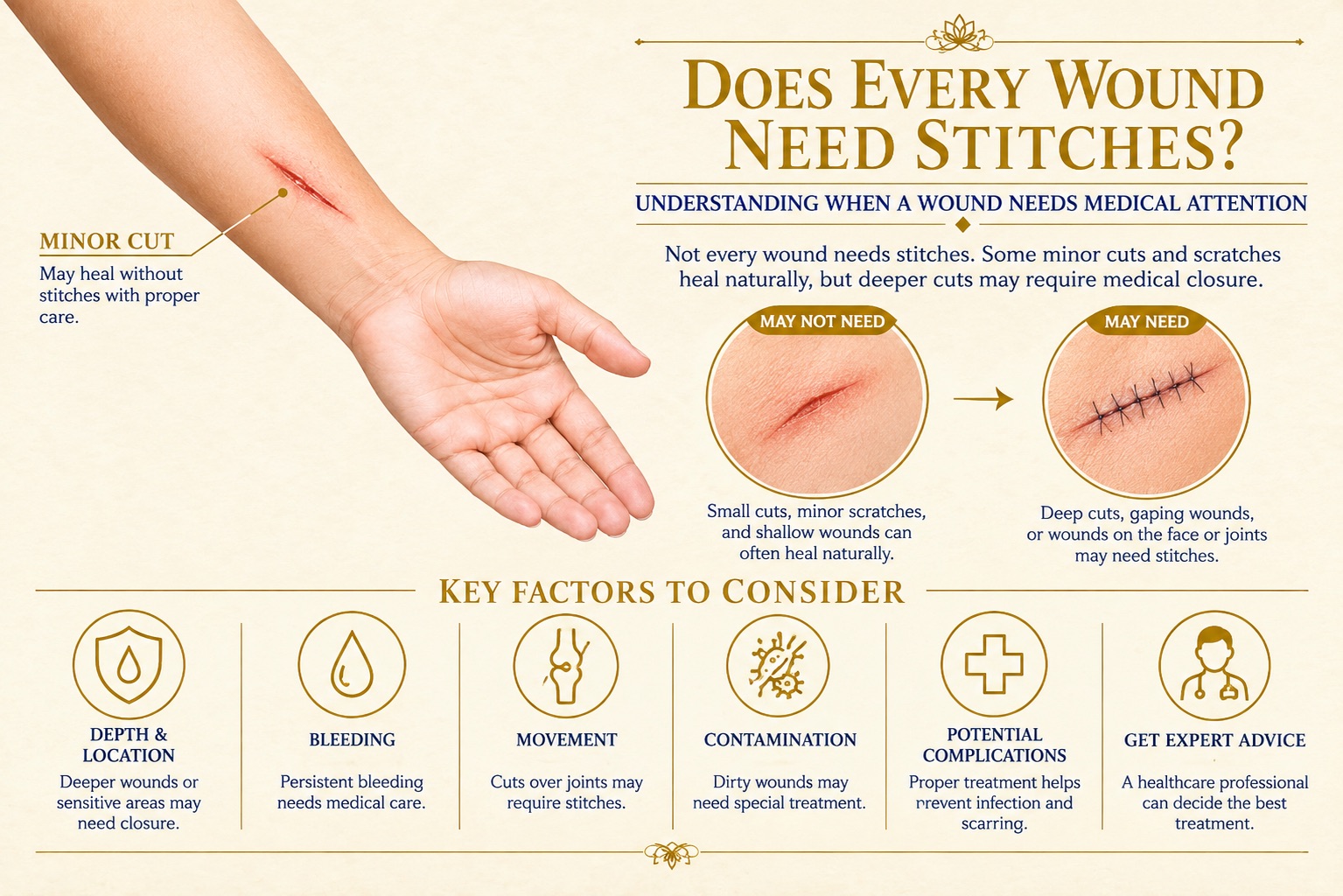
Not every wound needs stitches. Some minor cuts and scratches heal naturally with appropriate wound care. However, deeper cuts, wounds with separated edges, and injuries involving important structures may require medical closure or specialist treatment.
The right treatment depends on several factors, including the wound's depth, location, cause, bleeding, and the condition of the surrounding tissue.
Understanding when a wound needs medical attention can help you avoid complications and support better healing.
What Are Stitches, and Why Are They Used?
Stitches, also called sutures, are used to bring the edges of a wound together so that the tissue can heal.
Depending on the injury, a healthcare professional may use stitches to:
●Close deep or gaping cuts.
●Help control bleeding when appropriate.
●Support healing when wound edges do not stay together.
●Protect underlying tissues.
●Help achieve an appropriate functional and cosmetic result.
Not all wounds require stitches. Depending on the injury, a doctor may recommend medical adhesive, wound-closure strips, staples, dressings, or healing without closure.
Which Wounds May Not Need Stitches?
Some minor wounds can heal without stitches when they are properly cleaned and do not involve deeper tissue damage.
1. Small, Superficial Cuts
Minor cuts that affect only the surface layers of the skin may heal with appropriate cleaning and protection.
If the edges remain together, bleeding stops, and there are no signs of deeper injury, stitches may not be necessary.
2. Minor Scratches and Grazes
Scratches and grazes usually affect the outer layers of the skin. These injuries often heal with gentle cleaning and suitable dressings.
Extensive abrasions, heavily contaminated wounds, or injuries with embedded debris may need medical assessment.
3. Small Wounds With Edges That Stay Together
Some short, shallow cuts have edges that naturally remain together. Depending on their location and condition, these may not need formal closure.
A healthcare professional can determine whether simple wound care is sufficient.
Which Wounds May Need Stitches?
Certain injuries are more likely to require medical closure. A doctor should assess the wound rather than relying on its size alone.
1. Deep or Gaping Cuts
A wound that extends into deeper layers of the skin or has edges that remain separated may require closure.
Deep cuts can sometimes damage nerves, blood vessels, tendons, or muscles. Even a relatively small opening may hide a more significant injury.
2. Cuts on the Face
Facial wounds may require careful assessment because they can affect both appearance and function.
Appropriate wound closure may help align the skin edges and support healing. Injuries involving the eyelids, lips, or other important facial structures may require specialist care.
3. Wounds Over Joints or Areas of Movement
Cuts over the hands, fingers, elbows, or knees may reopen because of movement and tension.
Medical assessment helps determine whether closure is needed and whether underlying tendons, nerves, joints, or other structures have been injured.
4. Cuts With Persistent Bleeding
Bleeding that does not stop with firm, continuous pressure requires urgent medical assessment.
Some wounds need medical procedures to control bleeding and may also require closure. Severe or spurting bleeding is an emergency.
5. Wounds With Damaged or Exposed Tissue
Injuries that expose fat, muscle, tendons, or bone need prompt medical evaluation. These wounds may require more than routine stitches.
Depending on the extent of the injury, treatment could involve surgical repair, removal of damaged tissue, or reconstructive procedures.
What Happens if a Wound That Needs Stitches Is Left Untreated?
A wound that requires closure may not heal as expected if it is left without appropriate treatment.
Possible complications include:
●Delayed healing: Separated wound edges may take longer to heal.
●Infection: Bacteria and contamination can contribute to infection.
●Increased scarring: Some wounds may heal with wider or more noticeable scars.
●Functional problems: Injuries involving tendons, nerves, or other important structures may affect movement or sensation if not treated appropriately.
●More complex treatment: Delayed assessment can complicate management in some injuries.
Not every untreated cut develops these problems. The risk depends on the nature of the injury and the patient's health.
Can Every Wound Be Closed With Stitches?
No. The most appropriate wound treatment depends on the injury.
Stitches: Used for wounds whose edges need to be brought together and secured.
Medical adhesive: Used for selected clean, superficial cuts with suitable edges and low tension.
Wound-closure strips: Used for certain minor wounds where the edges can be held together without sutures.
Dressings and natural healing: Appropriate for some superficial wounds that do not require closure.
Surgical or reconstructive treatment: May be necessary for complex wounds involving significant tissue loss, damaged underlying structures, or areas where routine closure is not appropriate.
Some contaminated or infected wounds should not be closed immediately. The treating clinician may recommend cleaning, infection management, or delayed closure, depending on the circumstances.
Does Getting Stitches Prevent Scars?
Stitches can help align wound edges and may reduce the risk of a wound healing with widely separated edges. However, they cannot guarantee scar-free healing.
The final scar depends on factors such as:
●The wound's depth and location.
●The type and extent of tissue damage.
●Infection and healing complications.
●Skin characteristics and individual healing tendencies.
●Tension on the wound during recovery.
●Appropriate wound care and follow-up.
For wounds in visible areas or those involving important structures, careful assessment and appropriate closure can be particularly important.
When Should You Seek Medical Attention?
Seek prompt medical care if you have:
●A deep, gaping, or large cut.
●A wound that will not stop bleeding.
●A cut on the face, hand, or over a joint that may need closure.
●Exposed fat, muscle, tendon, or bone.
●Numbness, weakness, or difficulty moving the affected area.
●A bite, puncture wound, or heavily contaminated injury.
●Increasing redness, swelling, warmth, pain, pus, or fever.
For severe bleeding, spurting blood, or a serious injury, seek emergency care immediately.
While arranging medical attention, apply firm, continuous pressure with clean gauze or cloth to control bleeding, unless doing so would worsen an embedded-object injury. Do not attempt to close a deep wound yourself. A clinician can also assess whether tetanus vaccination or other preventive treatment is needed.
How Can a Plastic Surgeon Help With Complex Wounds?
Plastic and reconstructive surgeons treat injuries where wound closure requires careful attention to appearance, function, or tissue loss.
Depending on the wound, treatment may involve:
●Careful alignment and closure of wound edges.
●Repair of selected facial or hand injuries.
●Assessment of skin and soft-tissue damage.
●Skin grafting or flap reconstruction when tissue coverage is needed.
●Management of wounds that are healing poorly.
●Evaluation and treatment planning for significant scars.
Not every cut needs a plastic surgeon. However, specialist assessment may be helpful for complex injuries, wounds involving important structures, or wounds where the functional or cosmetic outcome is a concern.
Frequently Asked Questions
1. How do I know if my cut needs stitches?
A deep or gaping cut, persistent bleeding, or a wound involving the face, hands, joints, or deeper structures may need medical closure. A healthcare professional should assess the wound to determine the appropriate treatment.
2. Can a small cut still need stitches?
Yes. A small cut can be deep enough to damage underlying structures or have edges that do not stay together. The depth, location, and nature of the injury matter more than length alone.
3. How soon should I get stitches after an injury?
Seek medical assessment as soon as possible if you think a wound may need stitches. The suitable time window for closure varies according to the wound's location, cause, contamination, and condition. There is no single time limit that applies to every wound.
4. Can a wound heal naturally without stitches?
Yes. Many minor, superficial wounds heal without stitches when they are cleaned and protected appropriately. However, deeper wounds or injuries involving important structures should be assessed by a medical professional.
5. Do stitches always prevent scarring?
No. Stitches can help align wound edges, but some scarring is a normal part of healing. Appropriate treatment and follow-up may help achieve a better healing outcome, but results vary.
6. Should I consult a plastic surgeon for a facial cut?
A plastic surgeon may be helpful for facial cuts where careful alignment, appearance, or function is a concern. Deep facial wounds, injuries near the eyes, and cuts involving the lips or other important structures need prompt medical assessment.
Conclusion: The Right Treatment Makes a Difference
Not every wound needs stitches, but every significant injury deserves appropriate attention. Minor, superficial cuts may heal with routine wound care, while deeper or gaping wounds may need medical closure or specialist treatment.
The most important factors are the wound's depth, location, bleeding, contamination, and possible damage to underlying structures.
If you are unsure whether a wound needs stitches, seek medical assessment rather than waiting for it to worsen. Appropriate treatment can help support healing, protect function, and reduce the risk of avoidable complications.
Consult Dr. Divya Sai Narsingam
If you have a complex wound, significant tissue damage, or concerns about wound closure and reconstruction, a specialist consultation can help you understand the available treatment options.
Dr. Divya Sai Narsingam
Plastic and Reconstructive Surgeon
Serving patients across Hyderabad, including Gachibowli and Banjara Hills.
Book a consultation: https://drdivyaplasticsurgeon.com/