25 Nov 2026
Day 5: Do Breast Implants Come with an Expiry Date?
Breast implants do not automatically need to be replaced after a fixed number of years. However, they are not necessarily lifetime devices either. Some implants remain in good cond...
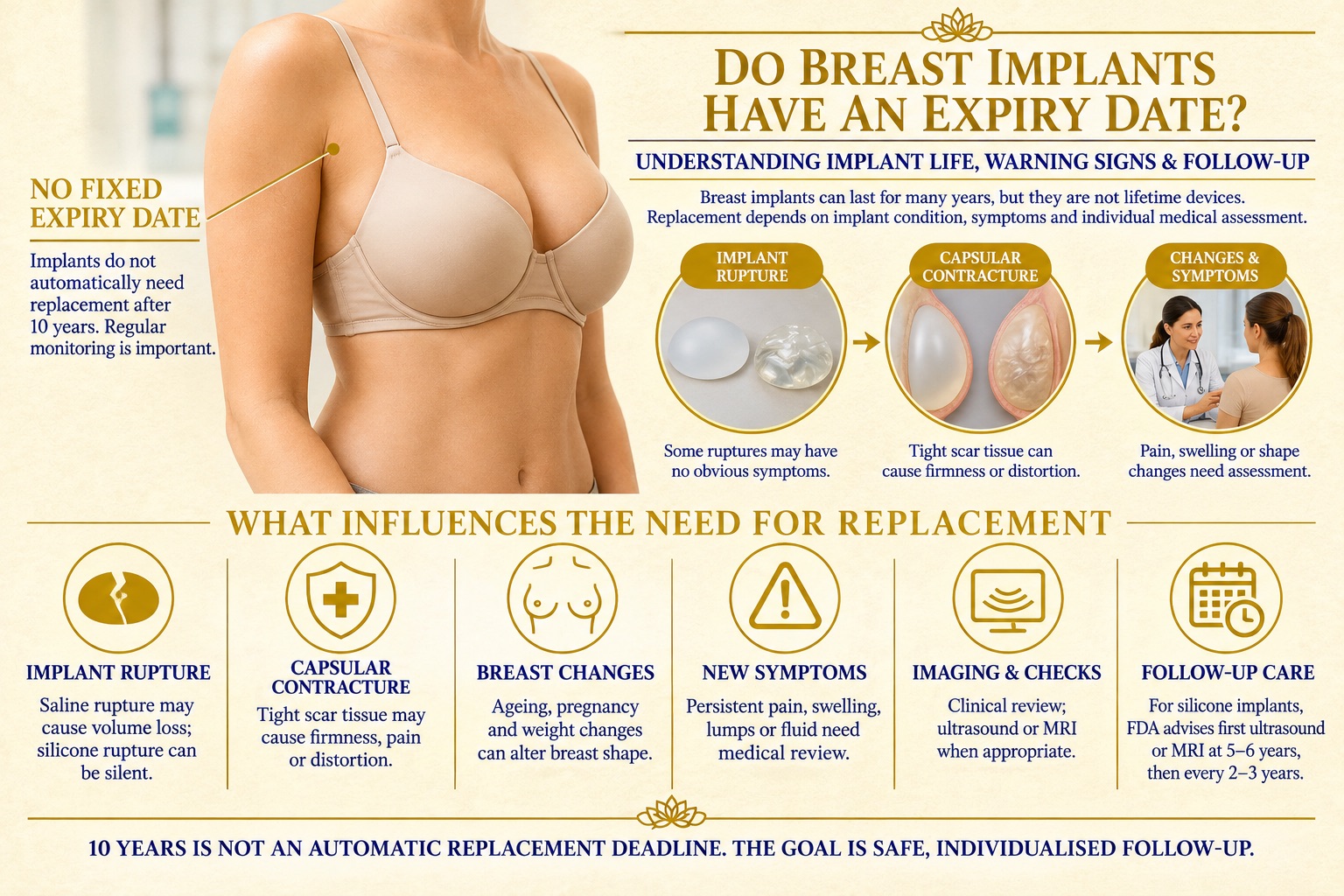
Breast implants do not automatically need to be replaced after a fixed number of years. However, they are not necessarily lifetime devices either. Some implants remain in good condition for many years, while others may require removal or replacement because of complications, changes in the implant, or individual medical circumstances.
The key is knowing when to get them checked, which warning signs to look for, and when replacement may be necessary.
Do Breast Implants Have an Expiry Date?
Breast implants do not have a universal expiry date that applies to every patient. Their lifespan varies depending on the type of implant, the individual's circumstances, and whether complications develop over time.
Unlike some medical products that have a defined expiration date, breast implants are intended to be monitored throughout their use. Having implants for 10 years does not automatically mean they must be replaced. Equally, implants that are less than 10 years old may require medical attention if a problem develops.
Regular follow-up with a qualified plastic surgeon helps assess implant health and determine whether any further evaluation is needed.
How Long Do Breast Implants Usually Last?
Breast implants can last for many years, but their longevity varies from person to person. There is no guaranteed lifespan for every implant.
Over time, changes can occur in the implant or the surrounding breast tissue. Factors such as implant rupture, capsular contracture, changes in breast shape, pregnancy, ageing, and weight fluctuations may influence whether further treatment is needed.
The decision to replace an implant should be based on medical findings, symptoms, the patient's preferences, and an individual assessment rather than the number of years alone.
When Might Breast Implants Need Replacement?
Breast implant replacement may be considered for several reasons.
1. Implant Rupture
An implant can rupture over time. With saline implants, a rupture generally causes the breast to lose volume as the saline is absorbed by the body. With silicone implants, a rupture may not cause an obvious change in breast shape or size.
This is why a silicone implant rupture can sometimes go unnoticed without appropriate imaging. A plastic surgeon may recommend an ultrasound or MRI when clinically indicated.
2. Capsular Contracture
The body naturally forms scar tissue around a breast implant. In some cases, this tissue becomes unusually tight, causing the breast to feel firm, appear distorted, or become painful. This condition is known as capsular contracture.
Depending on its severity, treatment may involve surgery, including implant removal or replacement.
3. Changes in Breast Shape or Position
Natural ageing, gravity, pregnancy, breastfeeding, and changes in body weight can affect breast shape over time. These changes do not necessarily mean that the implant itself has failed.
A consultation can help determine whether the concern relates to the implant, the surrounding breast tissue, or both.
4. Pain or Other New Symptoms
Persistent breast pain, swelling, changes in shape, lumps, or new fluid accumulation around an implant should be assessed by a medical professional. These symptoms do not always indicate an implant complication, but they should not be ignored.
Sudden swelling, significant pain, redness with fever, or rapidly developing changes require prompt medical evaluation.
5. Personal Preference
Some patients choose to change their implant size, alter their breast appearance, or remove their implants altogether. In these situations, surgery may be considered based on the patient's goals and medical suitability.
How Can You Know If Your Breast Implants Are Still in Good Condition?
You cannot reliably determine implant integrity by appearance or touch alone. Some complications produce noticeable symptoms, while others may be silent.
Your follow-up plan may include:
●Clinical examination by a qualified plastic surgeon.
●Review of any new symptoms or changes in breast appearance.
●Ultrasound or MRI when appropriate, particularly to assess silicone implant integrity.
●Discussion of your implant type, surgical history, and any previous imaging.
For patients with silicone breast implants, the US Food and Drug Administration recommends an initial ultrasound or MRI at 5–6 years after implantation and then every 2–3 years thereafter to screen for silent rupture. Your surgeon can advise on the appropriate surveillance plan, taking local guidance and your individual circumstances into account.
What Happens If Breast Implants Are Not Replaced?
If an implant remains intact and there are no complications, immediate replacement may not be necessary solely because a certain number of years has passed.
However, leaving a confirmed rupture or another significant complication unassessed may lead to further problems. The appropriate next step depends on the implant type, the nature of the complication, and the patient's health.
If a rupture or other implant-related issue is identified, your surgeon can explain the available options, which may include monitoring in selected circumstances, implant removal, or replacement.
Is Breast Implant Replacement Always Necessary After 10 Years?
No. Ten years is not an automatic replacement deadline for every breast implant.
Some patients may need surgery earlier because of rupture, capsular contracture, or other complications. Others may continue with their existing implants for longer, provided they remain suitable following clinical assessment and recommended monitoring.
The important point is to avoid treating implant age as the only factor in the decision.
When Should You Consult a Plastic Surgeon?
Arrange a consultation if you notice a change in breast shape or size, persistent discomfort, unusual firmness, swelling, or any new lump. Even if you have no symptoms, periodic follow-up is useful for reviewing your implant history and discussing appropriate monitoring.
Seek urgent medical assessment for sudden or rapidly increasing swelling, severe pain, fever with breast redness, or other significant new symptoms.
Final Thoughts
Breast implants do not automatically expire after a fixed number of years, but they are not guaranteed to last a lifetime. Knowing your implant type, attending recommended follow-up appointments, and seeking assessment when changes occur can help you make informed decisions about your breast health.
Dr. Divya Sai Narsingam, Plastic and Reconstructive Surgeon, can assess your individual concerns and discuss appropriate options for implant monitoring, removal, or replacement.
Serving patients across Hyderabad, including Gachibowli and Banjara Hills.
Website: https://drdivyaplasticsurgeon.com/