03 Nov 2026
Diwali Burns: Precautions, First Aid Tips and Treatment for Firecracker Burn Injuries
Celebrate a Safe Diwali – Know How to Prevent and Treat Burn Injuries Diwali is a festival of lights, happiness and celebration. However, the use of firecrackers, diyas, candles an...
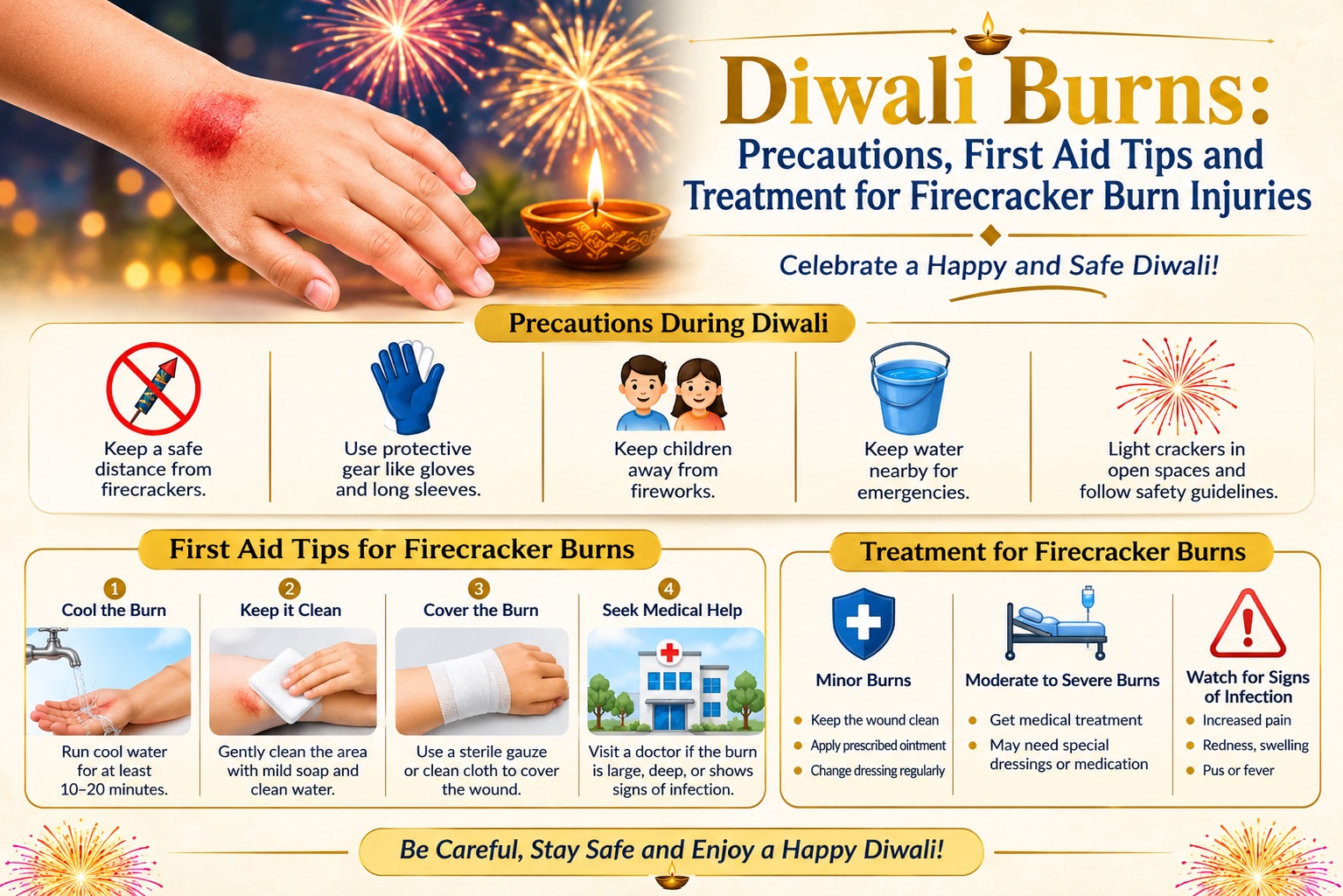
Celebrate a Safe Diwali – Know How to Prevent and Treat Burn Injuries
Diwali is a festival of lights, happiness and celebration. However, the use of firecrackers, diyas, candles and other decorative lighting can sometimes lead to accidental burns and fire-related injuries. Children, adults and even elderly people can suffer burns due to firecrackers, hot oil, sparklers or accidental contact with flames.
A minor burn may cause redness, pain and swelling, while severe burns can damage deeper layers of the skin, muscles and underlying tissues. In some cases, burn injuries may also result in permanent scars, restricted movement and functional problems.
Knowing the right Diwali burn precautions, immediate first aid steps and available burn treatments can help prevent complications and protect your loved ones.
Common Causes of Burn Injuries During Diwali
Some of the most common causes of burn injuries during Diwali include:
● Firecracker explosions: Accidental explosions can cause burns to the hands, face, legs and other exposed areas.
●Sparklers and flowerpots: Direct contact with hot sparks or burning materials can damage the skin.
●Diyas and candles: Accidental contact with flames or hot oil can cause burns.
●Electrical decorations: Faulty wiring, overloaded sockets and electrical short circuits can lead to fire-related injuries.
●Hot cooking oil: Spillage of hot oil or boiling liquids during festive cooking can cause scald injuries.
●Improper handling of fireworks: Holding crackers or attempting to relight unexploded fireworks can result in serious injuries.
Diwali Burn Prevention: Important Safety Precautions
A few simple precautions can significantly reduce the risk of burn injuries.
1. Wear Appropriate Clothing
●Prefer comfortable, well-fitted cotton clothes.
●Avoid loose, flowing and synthetic clothing while lighting firecrackers.
●Keep dupattas, saree pallu and long sleeves away from flames.
2. Maintain a Safe Distance
●Always light firecrackers in open spaces.
●Use a long-handled sparkler or lighting stick.
●Never hold firecrackers in your hands while lighting them.
●Maintain a safe distance after lighting fireworks.
3. Supervise Children
●Never allow children to handle firecrackers without adult supervision.
●Keep young children away from areas where fireworks are being used.
●Explain the dangers of touching burning or unexploded crackers.
4. Keep Emergency Supplies Ready
●Keep buckets of water and sand nearby.
●Have a first-aid kit available.
●Keep a fire extinguisher accessible where appropriate.
●Know the location of the nearest emergency medical facility.
5. Handle Unexploded Firecrackers Carefully
●Never attempt to relight a firecracker that has failed to explode.
●Do not approach unexploded fireworks immediately.
●Dispose of used fireworks safely after completely extinguishing them.
6. Take Care While Lighting Diyas and Candles
●Place diyas on stable, non-flammable surfaces.
●Keep them away from curtains, decorations and other combustible materials.
●Never leave burning candles or diyas unattended.
First Aid for Burns: What Should You Do Immediately?
Knowing the correct first aid for burns is extremely important. The first few minutes following a burn injury can make a difference in reducing further tissue damage.
Follow these steps if someone suffers a burn during Diwali.
Step 1: Move Away from the Source of Fire
Immediately move the injured person away from the firecracker, flame or hot object. If clothing catches fire, stop, drop and roll, or smother the flames with a suitable blanket.
Step 2: Cool the Burned Area with Running Water
●Place the affected area under cool running water for approximately 20 minutes.
●Do not use ice or extremely cold water.
●Cooling helps reduce pain and limits further tissue damage.
●Keep the rest of the person's body warm, particularly in children and elderly individuals.
Step 3: Remove Tight Accessories
Carefully remove rings, watches, bangles and other tight accessories before swelling develops.
Remove loose clothing near the injured area if it can be done easily. Never pull away clothing or material stuck to the burned skin.
Step 4: Cover the Burn
After cooling, loosely cover the affected area with a clean, non-fluffy cloth or sterile non-adherent dressing.
Avoid applying pressure to the injured area.
Step 5: Seek Medical Attention
Consult a doctor if the burn is deep, extensive, blistering, worsening or located on sensitive areas such as the face, hands or feet. Serious burns require immediate hospital evaluation.
What Should You NOT Do After a Burn Injury?
Some commonly followed home remedies can worsen burn injuries and delay proper treatment.
Avoid the following:
●Do not apply toothpaste, butter, oil or ghee to the burned area.
●Do not apply ice directly to the skin.
●Do not burst or puncture blisters.
●Do not remove skin or clothing stuck to the wound.
●Do not apply random creams, powders or traditional home remedies.
●Do not ignore burns simply because the initial pain appears mild.
Important: Proper cooling and timely medical evaluation are more important than experimenting with home remedies.
Types of Burn Injuries and Their Severity
Burn injuries are generally classified according to the depth of skin damage.
First-Degree Burns
These are superficial burns that affect the outermost layer of the skin.
Common symptoms:
●Redness
●Mild swelling
●Pain and tenderness
Second-Degree Burns
These burns affect the outer layer and part of the deeper skin layer.
Common symptoms:
●Blister formation
●Severe pain
●Redness and swelling
●Wet or moist-looking skin
Third-Degree Burns
These are severe burns that damage the full thickness of the skin and may extend into deeper tissues.
Common symptoms:
●White, brown or charred skin
●Leathery skin texture
●Reduced sensation in the affected area due to nerve damage
●Extensive tissue damage
Severe burns require urgent medical attention and specialist care.
When Should You Consult a Plastic Surgeon for Burn Injuries?
Not all burn injuries are minor. Some burns require specialised treatment by a plastic and reconstructive surgeon to restore skin coverage, function and appearance.
You should seek medical evaluation for:
●Deep burns affecting multiple layers of the skin.
●Burns involving the face, hands, feet or joints.
●Large burns or burns with extensive blistering.
●Burns that show signs of infection or delayed healing.
●Firecracker injuries causing tissue damage.
●Burns resulting in restricted movement or tightness of the skin.
●Persistent scars or contractures following previous burn injuries.
Burn injuries affecting the face, hands, feet, genitals or major joints need prompt assessment. Burns associated with breathing difficulty, smoke inhalation or facial burns should be treated as emergencies.
Burn Treatment and Management
Burn treatment depends on the depth, size, location and severity of the injury. Early medical intervention can help reduce complications and improve recovery.
A plastic and reconstructive surgeon may recommend the following treatments depending on the patient's condition.
1. Burn Wound Cleaning and Dressing
The affected area is carefully assessed, cleaned and dressed to protect the wound, reduce infection risk and support healing.
2. Pain Management
Appropriate medications may be prescribed to manage pain and discomfort during the healing process.
3. Skin Grafting
For deeper burns involving significant skin loss, skin grafting may be required. Healthy skin is taken from another area of the body and used to cover the damaged area.
4. Reconstructive Surgery
In severe burn injuries, reconstructive procedures may be required to restore damaged tissues, improve appearance and support normal body function.
5. Post-Burn Scar Management
Burn injuries can sometimes leave permanent scars. Depending on the condition, treatment may include scar management, pressure therapy, laser-based procedures or surgical scar revision.
6. Post-Burn Contracture Release
When burn scars heal with excessive tightening, they can restrict movement, especially around the neck, fingers, elbows and joints.
Contracture release surgery and reconstructive procedures may help improve mobility and restore function.
Why Early Treatment Matters
Delaying treatment for a serious burn injury can increase the risk of infection, tissue damage, scarring and functional complications.
Early assessment by a qualified plastic and reconstructive surgeon helps determine the appropriate treatment approach.
For extensive or deep burns, specialised hospital care may include intravenous fluids, wound management, surgical procedures, skin grafting and rehabilitation.
Every burn injury is different, and treatment should be planned according to the patient's individual condition.
Consult Dr. Divya Sai Narsingam – Plastic & Reconstructive Surgeon in Hyderabad
If you or a family member suffers a burn injury during Diwali, timely medical attention is essential.
Dr. Divya Sai Narsingam is a Board-Certified Plastic and Reconstructive Surgeon with over 14 years of clinical experience. She has expertise in burn and post-burn reconstruction, skin grafting, scar revision, trauma reconstruction and complex reconstructive procedures.
She provides individualised evaluation and treatment planning based on the severity of the burn injury, helping patients work towards wound healing, functional recovery and improved appearance.
For consultation regarding burn injuries, post-burn scars or reconstructive treatment, you can consult
Dr. Divya Sai Narsingam at:
CARE Hospitals – Gachibowli, Hyderabad
AIG Hospitals – Banjara Hills, Hyderabad
Website: https://drdivyaplasticsurgeon.com/
Frequently Asked Questions (FAQs)
1. What is the first thing to do after a firecracker burn?
Immediately move away from the source of fire and cool the affected area under cool running water for approximately 20 minutes. Cover it with a clean, non-adherent dressing and seek medical attention depending on the severity.
2. Can I apply toothpaste or ice to a burn?
No. Toothpaste, butter, oils and direct ice application should be avoided. They can cause additional problems and interfere with proper wound assessment.
3. When should I visit a hospital for a burn injury?
Seek immediate medical attention for deep, large or severe burns, burns involving the face, hands, feet or joints, and any burn associated with breathing difficulties. Children with burns should receive prompt medical assessment.
4. Can plastic surgery help treat burn scars?
Yes. Depending on the type and severity of the scar, treatment may include scar revision, skin grafting, contracture release or other reconstructive procedures.
5. Can burn injuries cause permanent skin damage?
Deep burns can damage skin and underlying tissues, sometimes resulting in permanent scars, changes in skin texture and restricted movement. Early treatment and appropriate follow-up care can help reduce complications.
Celebrate a Safe and Happy Diwali!
Diwali is a time to spread happiness, not injuries. Follow firecracker safety precautions, supervise children and understand the correct first aid measures for burns.
If a burn injury occurs, do not rely on home remedies or delay medical attention. Timely treatment by an experienced plastic and reconstructive surgeon can make a significant difference in recovery.
Wishing everyone a Safe, Healthy and Happy Diwali!
For burn injuries, post-burn scars and reconstructive surgery consultations, consult Dr. Divya Sai Narsingam at CARE Hospitals, Gachibowli, and AIG Hospitals, Banjara Hills, Hyderabad.