25 Nov 2026
Day 6: Can You Breastfeed After Breast Surgery?
Breast augmentation, breast reduction, breast lifts, or surgery to remove a benign breast lump can raise an important question for women planning a family: Will I still be able to...
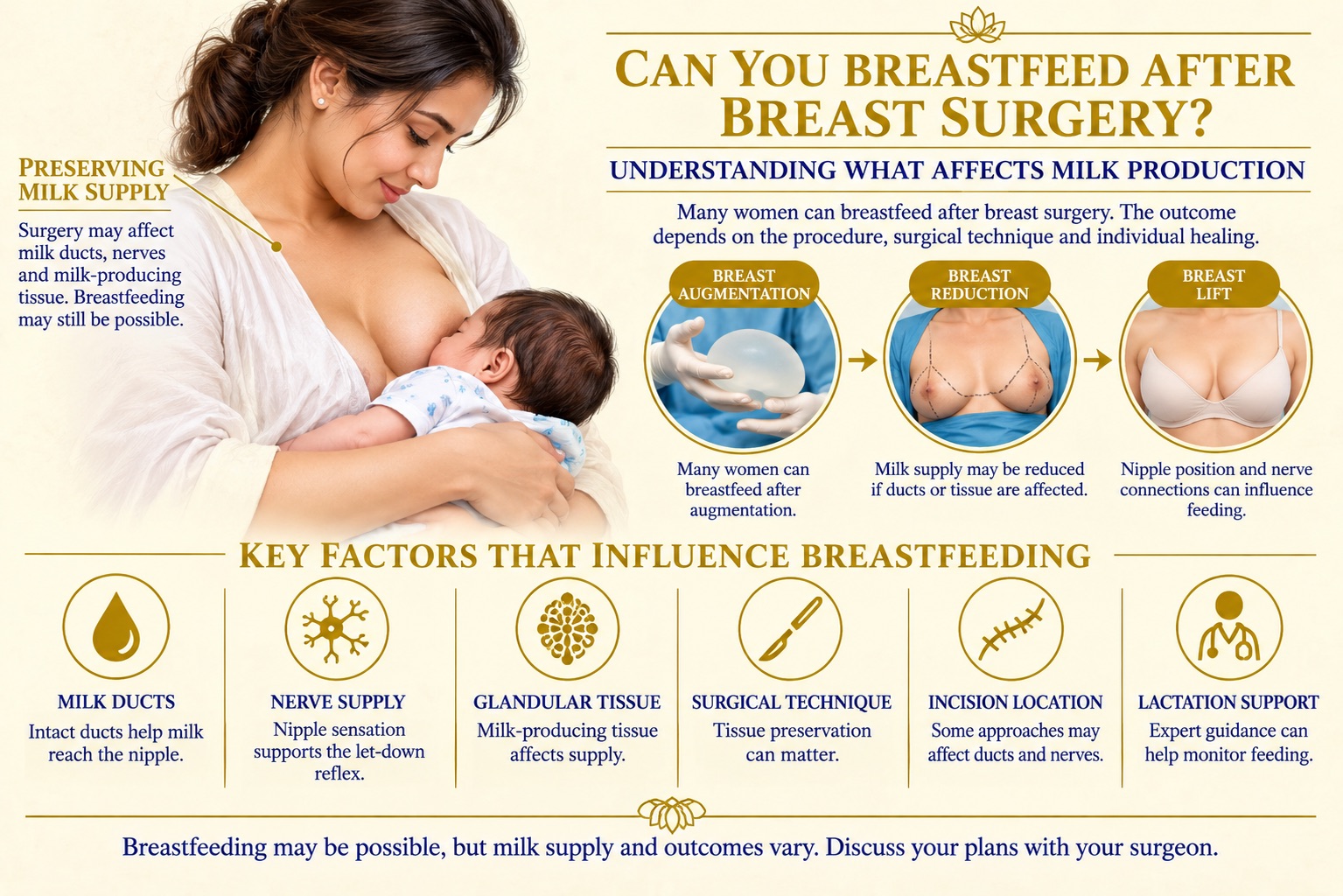
Breast augmentation, breast reduction, breast lifts, or surgery to remove a benign breast lump can raise an important question for women planning a family: Will I still be able to breastfeed after breast surgery?
In many cases, yes! However, the ability to breastfeed depends on the type of surgery performed, the surgical technique used, and whether the milk-producing tissue, milk ducts, and nerves are affected.
Breast surgery does not automatically mean you will be unable to breastfeed. Understanding how different procedures may affect milk production can help you make an informed decision before surgery.
How Does Breast Surgery Affect Breastfeeding?
Breastfeeding depends on several structures working together. The milk-producing glands make breast milk, the milk ducts carry it towards the nipple, and nerves help trigger the hormonal responses involved in milk production and milk release.
If these structures remain largely intact, breastfeeding may still be possible after surgery. However, if surgery removes or damages some of the milk-producing tissue, interrupts milk ducts, or affects the nerves around the nipple, milk supply may be reduced.
Every patient's anatomy and surgical history are different, so breastfeeding outcomes cannot be guaranteed.
1. Can You Breastfeed After Breast Augmentation?
Breast augmentation involves placing implants to increase breast size. Many women can breastfeed after this procedure, especially when the surgery preserves the milk ducts, glandular tissue, and nerves responsible for breastfeeding.
However, the outcome can depend on several factors:
●Incision location: Some incision approaches may carry a greater risk of affecting milk ducts or nerves around the nipple.
●Implant placement: The position of the implant may influence pressure on the surrounding breast tissue.
●Existing breast tissue: Some women naturally have less milk-producing glandular tissue, which can affect milk supply regardless of surgery.
●Surgical technique: The way the procedure is performed can influence the structures involved.
Breast implants do not automatically prevent breastfeeding. If you are planning a pregnancy, discuss your future breastfeeding goals with your plastic surgeon before undergoing augmentation.
2. Can You Breastfeed After Breast Reduction?
Breast reduction surgery removes breast tissue, fat, and skin to reduce breast size and improve comfort. Depending on the technique, the procedure may affect milk-producing glands, ducts, and nerves.
Some women can breastfeed after breast reduction, while others may experience a reduced milk supply or may not produce enough milk to meet their baby's full nutritional needs.
The amount of tissue removed is not the only consideration. The surgical technique and how well the connection between the nipple, ducts, and remaining glandular tissue is preserved can also make a difference.
If you are considering breast reduction and hope to breastfeed in the future, discuss this goal with your surgeon before surgery. In some cases, delaying the procedure until after completing planned pregnancies may be worth discussing, depending on your symptoms and individual circumstances.
3. Can You Breastfeed After a Breast Lift?
A breast lift, also known as mastopexy, reshapes and raises the breasts by removing excess skin and repositioning the nipple and areola.
Breastfeeding may remain possible after a breast lift, particularly when the milk-producing tissue, ducts, and nerves are preserved. However, some surgical techniques can affect these structures, potentially influencing milk supply.
The risk depends on the technique used, the extent of nipple repositioning, and the individual's anatomy.
If future breastfeeding is important to you, ask your surgeon how the proposed technique may affect lactation and whether an approach that preserves the relevant structures is suitable for you.
4. Can You Breastfeed After Removal of a Benign Breast Lump?
Many women can breastfeed after surgery to remove a benign breast lump, but the outcome depends on the location and size of the lump and the amount of surrounding tissue removed.
A small lump removed from an area away from the major milk ducts may have little effect on breastfeeding. However, surgery involving a large area of breast tissue or ducts close to the nipple may affect milk production or milk flow.
Before surgery, your surgeon can explain the likely impact based on the lump's location and the planned procedure.
If you have already undergone lump removal, you may still be able to breastfeed. Your medical team can help assess your situation and advise you on appropriate support.
What If Your Milk Supply Is Low After Breast Surgery?
A reduced milk supply does not necessarily mean that breastfeeding is impossible. Some women produce enough milk for exclusive breastfeeding, while others may need additional support or supplementation.
If you experience difficulty breastfeeding after surgery, consider seeking help from a lactation consultant and your baby's paediatrician.
Support may include:
●Checking your baby's latch and feeding position.
●Monitoring your baby's weight gain and hydration.
●Assessing milk transfer and feeding frequency.
●Developing a feeding plan suited to your milk supply and your baby's needs.
●Discussing supplementation when medically appropriate.
The priority is ensuring that your baby receives adequate nutrition while supporting your breastfeeding goals.
What Should You Discuss With Your Surgeon Before Breast Surgery?
If you plan to breastfeed in the future, make this an important part of your consultation. Consider asking:
- Will the proposed procedure affect my milk-producing tissue or milk ducts?
- How will the surgical technique affect the nerves around my nipple?
- Is there an approach that may better preserve my breastfeeding potential?
- Could I experience a reduced milk supply after this procedure?
- Should I consider the timing of surgery in relation to my future pregnancy plans?
Clear communication helps your surgeon understand your priorities and explain the potential benefits, limitations, and risks of the procedure.
Final Thoughts
Breast augmentation, breast reduction, breast lifts, and benign breast lump removal do not automatically prevent breastfeeding. Many women can breastfeed after these procedures, although some may experience a reduced milk supply or other difficulties.
The outcome depends on the procedure, the surgical technique, and how the milk-producing tissue, ducts, and nerves are affected. If breastfeeding is part of your future plans, discussing it before surgery can help you understand your options and make an informed decision.
Dr. Divya Sai Narsingam, Plastic and Reconstructive Surgeon, can discuss your surgical goals, explain procedure-specific considerations, and help you understand how different techniques may affect future breastfeeding.
Serving patients across Hyderabad, including Gachibowli and Banjara Hills.
Website: https://drdivyaplasticsurgeon.com/