18 Nov 2026
Day 4: Can Reconstructive Surgery Restore Normal Body Function Completely?
Can reconstructive surgery restore normal body function completely? It depends on several factors, and every patient's recovery is different. The right treatment at the right time,...
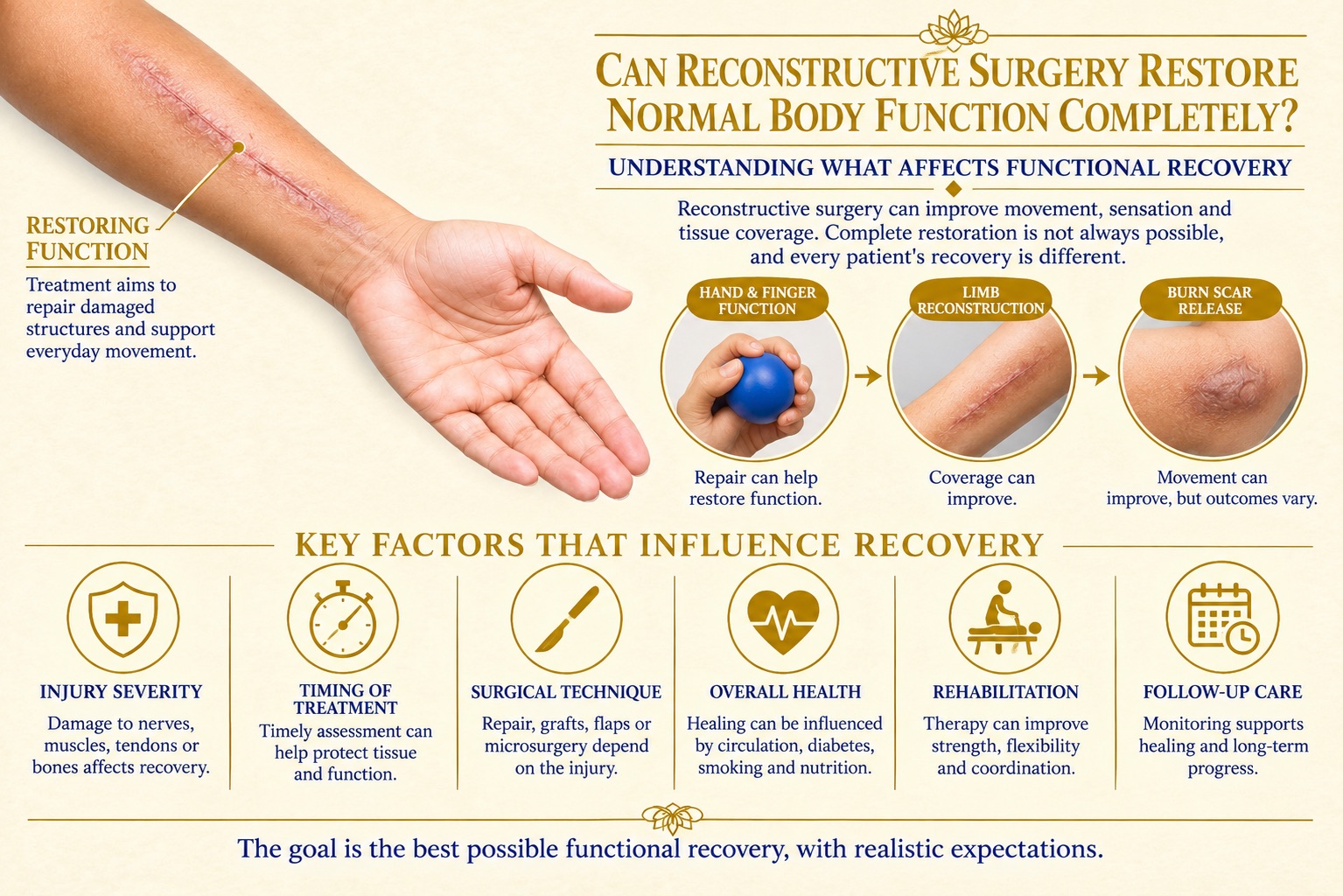
Can reconstructive surgery restore normal body function completely? It depends on several factors, and every patient's recovery is different.
The right treatment at the right time, the surgeon's expertise, and proper rehabilitation can all make a significant difference in functional recovery.
Reconstructive surgery aims to restore the form and function of body parts affected by injuries, burns, congenital conditions, disease, or previous surgical procedures. While many patients experience meaningful improvements, achieving complete restoration of normal function is not always possible.
Understanding what reconstructive surgery can achieve helps patients develop realistic expectations and make informed decisions about their treatment.
What Is Reconstructive Surgery?
Reconstructive surgery involves repairing or rebuilding body structures affected by damage, tissue loss, or abnormal development.
Unlike procedures performed primarily to change appearance, reconstructive procedures often focus on improving essential functions such as movement, sensation, tissue coverage, and wound healing. They may also address appearance and help patients regain confidence.
Depending on the patient's condition, reconstructive surgery may involve:
●Repairing damaged skin and soft tissues.
●Reconstructing injured hands, arms, or other limbs.
●Skin grafting to cover areas of skin loss.
●Tissue flap surgery to restore soft-tissue coverage.
●Microsurgery to reconnect small blood vessels, nerves, or other structures in selected cases.
●Releasing scars that restrict movement.
●Reconstructing areas affected by burns, trauma, or previous surgery.
The appropriate procedure depends on the nature of the damage, the patient's overall health, and the goals of treatment.
Can Reconstructive Surgery Restore Normal Function Completely?
In some cases, reconstructive surgery can restore function to a level close to normal. In others, patients may experience partial improvement or require additional procedures and rehabilitation.
The outcome depends on several important factors.
1. The Severity of the Original Injury
The extent of tissue damage plays a major role in recovery.
An injury affecting only the skin may have a different prognosis from one involving muscles, tendons, nerves, blood vessels, or bones.
For example, a wound that can be repaired without significant damage to deeper structures may heal with good functional results. An injury involving extensive nerve damage or loss of muscle tissue may require more complex treatment, and complete recovery may not be possible.
2. The Timing of Treatment
Timely medical assessment can be important for injuries involving blood circulation, nerves, tendons, or significant tissue loss.
Some injuries require urgent intervention to preserve viable tissue and protect function. Others benefit from planned or staged reconstruction after the wound has been stabilised.
The appropriate timing depends on the injury. Delayed reconstruction is sometimes necessary and does not automatically mean that the outcome will be poor.
3. The Surgical Technique Used
Different reconstructive problems require different surgical approaches.
Depending on the injury, a surgeon may use direct repair, skin grafting, tissue flaps, nerve repair, tendon reconstruction, or microsurgical techniques.
Choosing an appropriate technique helps address the specific damage and provides the best realistic opportunity for functional improvement.
4. The Patient's Overall Health
A patient's general health can influence wound healing and recovery.
Conditions affecting blood circulation, diabetes, smoking, nutritional deficiencies, and certain medications may influence the healing process.
A medical team considers these factors when planning treatment and recommending steps to support recovery.
5. Rehabilitation and Follow-Up
Surgery is often only one part of the recovery process.
Depending on the procedure, rehabilitation may include physiotherapy, occupational therapy, movement exercises, scar management, or other specialised care.
Rehabilitation can help improve strength, flexibility, coordination, and the ability to perform everyday activities. Following the recommended recovery plan is an important part of achieving the best possible outcome.
Which Functions Can Reconstructive Surgery Help Restore?
The functional improvements possible depend on the body part affected and the structures that have been damaged.
Hand and Finger Function
Hand injuries may affect gripping, bending the fingers, sensation, or fine motor movements.
Reconstructive procedures may repair damaged tissues or restore coverage over exposed structures. When tendons, nerves, or bones are injured, additional repairs or rehabilitation may be required.
The degree of recovery depends on the extent of the original damage and the response to treatment.
Limb Function After Severe Injuries
Complex limb injuries may involve skin loss, damaged muscles, fractures, or compromised blood circulation.
Reconstruction can help cover exposed tissues, restore blood supply in selected cases, and support limb preservation. However, restoring normal strength, sensation, and movement may require several procedures and prolonged rehabilitation.
Function After Burn Injuries
Severe burns can cause skin loss, tight scars, and contractures that restrict movement.
Reconstructive surgery may help release restrictive scars, improve tissue coverage, and restore movement in affected areas. Physiotherapy and continued scar management may also be important.
Facial Function
Facial injuries can affect eyelid closure, lip movement, facial symmetry, or other important functions.
Reconstructive treatment aims to repair damaged structures and improve function while considering appearance. Outcomes depend on which tissues and nerves have been affected.
Does Reconstructive Surgery Always Require Multiple Procedures?
No. Some reconstructive procedures can be completed in a single operation, while complex injuries may require several stages.
Additional procedures may be necessary when:
●The injury involves extensive tissue loss.
●The wound needs preparation before definitive reconstruction.
●A complex structure requires staged repair.
●Scar tissue restricts movement during recovery.
●Further refinement is needed to improve function or appearance.
The treatment plan depends on the patient's condition and the complexity of the reconstruction. The need for more than one procedure does not necessarily indicate that the initial surgery has failed.
What Can Patients Expect During Recovery?
Recovery varies depending on the procedure, the area treated, and the severity of the original condition.
The recovery process may involve:
Initial healing: The surgical site is monitored for wound healing, blood supply, infection, and other complications.
Gradual return to movement: Depending on the repair, movement may be restricted initially and introduced according to the surgeon's instructions.
Rehabilitation: Exercises and specialised therapy may help restore movement, strength, coordination, and daily function.
Long-term follow-up: Some patients need continued monitoring for scar formation, stiffness, changes in sensation, or other concerns.
Recovery may take weeks to months, and complex reconstructions can require longer. Improvement is not always linear, and the final functional outcome may take time to assess.
How Can Patients Improve Their Chances of Recovery?
Although no treatment can guarantee complete restoration of function, patients can take practical steps to support recovery.
●Seek appropriate medical attention after a significant injury.
●Follow wound-care instructions carefully.
●Attend scheduled follow-up appointments.
●Avoid smoking, particularly during the healing period.
●Maintain a balanced diet that supports tissue repair.
●Follow the recommended physiotherapy or rehabilitation programme.
●Report new symptoms or unexpected changes to the treating team.
Patients should follow individual medical advice rather than starting exercises or changing wound care independently.
Frequently Asked Questions
1. Can reconstructive surgery restore 100% of normal function?
Not always. Some patients regain near-normal function, while others experience partial improvement. The outcome depends on the severity of the injury, the structures involved, the treatment provided, and the rehabilitation process.
2. How long does it take to recover from reconstructive surgery?
Recovery depends on the procedure and the patient's condition. Some patients recover over several weeks, while complex reconstructions may require months of healing and rehabilitation.
3. Can reconstructive surgery restore sensation after nerve damage?
In selected cases, nerve repair or reconstruction may help restore sensation. However, nerve recovery depends on factors such as the type and extent of injury, the timing and method of repair, and the body's healing response. Normal sensation cannot be guaranteed.
4. Is physiotherapy necessary after reconstructive surgery?
Not every patient requires formal physiotherapy, but rehabilitation is important after many procedures involving hands, limbs, joints, burns, or restrictive scars. The treating team determines the appropriate programme.
5. Will reconstructive surgery improve both function and appearance?
It may improve both, depending on the injury and the procedure. However, functional recovery and cosmetic outcomes vary, and achieving both completely may not always be possible.
6. What happens if normal function cannot be fully restored?
Treatment may still improve movement, comfort, tissue coverage, or the ability to perform everyday activities. Depending on the condition, additional surgery, rehabilitation, assistive devices, or long-term management may help patients achieve their functional goals.
Conclusion: Focus on the Best Possible Functional Recovery
Reconstructive surgery can make a meaningful difference for patients affected by severe injuries, burns, tissue loss, and other conditions that interfere with normal body function.
However, complete restoration depends on the nature of the damage, the treatment approach, the patient's overall health, and the rehabilitation process.
The goal is to achieve the best possible functional outcome for each individual, with realistic expectations and appropriate follow-up care.
If an injury or condition is affecting your movement, sensation, or everyday activities, a specialist assessment can help you understand the available reconstructive options and the likely recovery process.
Consult Dr. Divya Sai Narsingam
For concerns involving complex injuries, tissue loss, or functional problems that may require reconstructive treatment, a consultation can help determine an appropriate treatment plan based on your individual needs.
Dr. Divya Sai Narsingam
Plastic and Reconstructive Surgeon
Serving patients across Hyderabad, including Gachibowli and Banjara Hills.
Website: https://drdivyaplasticsurgeon.com/